Choosing the Right Shelter-in-Place Kit
Shelter-in-place planning can look different from one facility to another. Some organizations need compact supplies positioned near individual employees or work areas, while others need larger kits capable of supporting a classroom, department or designated shelter area.
More Prepared offers individual and group Shelter-in-Place Kits in multiple container styles so organizations can distribute emergency supplies based on their facility layout, occupancy and emergency plan.
Individual Shelter-in-Place Kits
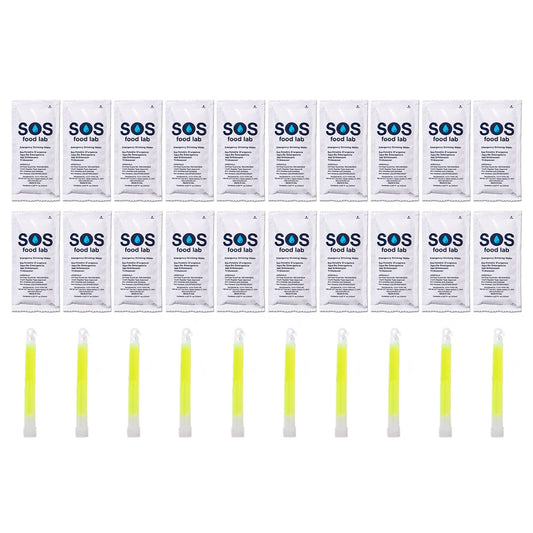
1-Person Shelter-in-Place Kits provide essential supplies for an individual who may need to remain indoors during an emergency. Core supplies include emergency communication and lighting, an N95 respirator, plastic sheeting and duct tape, an emergency blanket, drinking water and basic sanitation items.
Choose the Wall-Mount Case for a fixed, visible emergency supply location or the Waterproof Pouch for compact, portable storage at a workstation, in a cabinet, vehicle or other designated location.
Individual kits can be especially useful in offices, classrooms, reception areas, security stations, isolated work areas and facilities where emergency supplies need to be distributed rather than stored only in a central location.
Group Shelter-in-Place Kits
For departments, classrooms and designated shelter areas, group kits provide a broader range and larger quantity of emergency supplies.
The 10-Person Shelter-in-Place Emergency Kit – Wheeled Duffel includes emergency food and water, first aid, N95 respirators, emergency blankets, lighting, sanitation supplies, a NOAA emergency radio and temporary sealing materials in a portable wheeled bag.
The 25-Person Shelter-in-Place Emergency Kit – Rolling Bin expands those capabilities for larger groups, with supplies scaled for up to 25 occupants and two NOAA emergency radios. The high-visibility 65 gallon rolling container provides centralized storage while allowing the kit to be moved within the facility when necessary.
Organizations can also distribute multiple kits among floors, departments or shelter areas rather than relying on one centralized supply location.
What Is Shelter-in-Place Preparedness?
Sheltering in place means remaining inside a building or moving to a designated indoor area when conditions outside may present a greater hazard than staying indoors. Depending on the emergency and instructions from public-safety authorities, occupants may be directed to close doors and windows, limit outside-air infiltration and remain inside until conditions improve or further instructions are provided.
Potential shelter-in-place situations can include hazardous outdoor air, chemical releases, certain severe weather events, nearby fires or smoke, infrastructure emergencies and other incidents where evacuation may not be the safest immediate action.
Shelter-in-place planning should be part of a broader emergency preparedness program that also addresses evacuation. Organizations should establish procedures for both situations and make sure employees or occupants understand when and how each procedure may be used.
Temporary Sealing Supplies
Many Shelter-in-Place Kits include plastic sheeting and duct tape that can be used when emergency procedures or public-safety instructions call for temporarily reducing outside-air infiltration around doors, windows or other openings.
These materials are not a substitute for appropriate building systems or respiratory protection and should be used according to the organization's emergency procedures and instructions from local authorities.
Planning Supplies Around Your Facility
The appropriate number, size and placement of Shelter-in-Place Kits depends on factors such as facility size, number of occupants, building layout and designated shelter locations.
Rather than storing all emergency supplies in one location, larger organizations may choose to distribute kits among floors, departments, classrooms or designated shelter areas. Individual kits can provide coverage for isolated work areas or personnel, while 10-person and 25-person kits can support larger groups.
Emergency supplies should be stored in known, readily accessible locations and inspected periodically. Food, water, first aid supplies, respirators and other dated components should be reviewed for applicable expiration or replacement dates, and radios and lighting equipment should be checked for proper operation.
Frequently Asked Questions
What is a Shelter-in-Place Kit?
A Shelter-in-Place Kit contains emergency supplies intended to support occupants when an emergency requires them to remain indoors rather than evacuate. Depending on the kit, supplies may include emergency communication, lighting, respiratory protection, plastic sheeting and duct tape, food, water, first aid and sanitation equipment.
When should you shelter in place instead of evacuating?
Whether to evacuate or shelter in place depends on the type and location of the emergency. Occupants should follow their organization's emergency procedures and instructions from local public-safety authorities. In some situations, hazardous conditions outside the building may make remaining indoors the safer immediate action.
Why do Shelter-in-Place Kits include plastic sheeting and duct tape?
Plastic sheeting and duct tape can be used when emergency procedures or authorities instruct occupants to temporarily reduce outside-air infiltration around doors, windows or other openings.
Do Shelter-in-Place Kits include N95 respirators?
Many of our Shelter-in-Place Kits include N95 respirators as part of their emergency supplies. Appropriate respiratory protection depends on the specific hazard, and occupants should follow instructions from public-safety authorities during an emergency.
Do Shelter-in-Place Kits include food and water?
Contents vary by kit. Our individual 1-person kits include emergency drinking water but do not contain emergency food. Larger group kits are available with emergency food and water in quantities based on the kit's intended occupant capacity. Review the individual product's contents for exact quantities.
What size Shelter-in-Place Kit does my organization need?
Kit capacity should be based on the number of people expected to use a particular shelter area and how emergency supplies are distributed throughout the facility. Organizations may use a combination of individual, 10-person and 25-person kits rather than selecting one kit size for the entire building.
Where should Shelter-in-Place Kits be stored?
Kits should be stored in known, readily accessible locations near the occupants or shelter areas they are intended to support. Avoid locations that could become inaccessible if movement through the building is restricted during an emergency.
Are Shelter-in-Place Kits the same as 72-hour emergency kits?
Not necessarily. Shelter-in-Place Kits are designed specifically to provide supplies useful when occupants must remain indoors. Some group kits include emergency food and water, while individual kits focus on immediate shelter-in-place needs and do not provide a complete 72-hour supply of food and water.
Can different Shelter-in-Place Kit sizes be used together?
Yes. Organizations can combine individual and group kits based on their facility layout and emergency plan. For example, individual kits may be placed in offices or isolated work areas while larger kits are positioned in classrooms, departments or designated shelter areas.