Why Organizations Use Emergency Food Bars
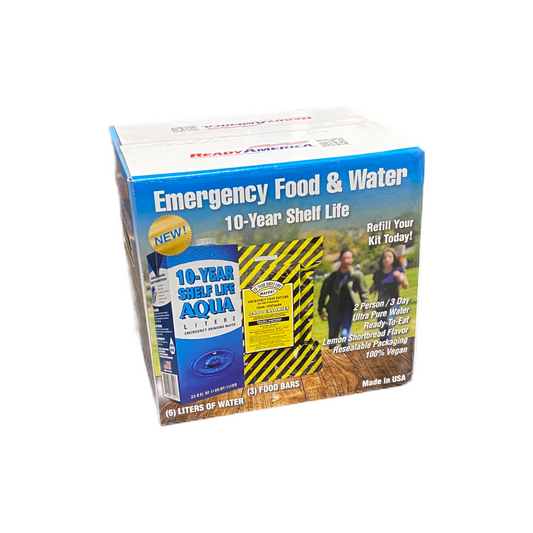
Emergency food bars are designed specifically for emergency use. They are calorie-dense, non-thirst-provoking, require no preparation, no water, no cooking, and no utensils, and store easily for years in compact packaging. Their low cost per person and long shelf life make them ideal for schools, workplaces, warehouses, government facilities, and public agencies building emergency preparedness supplies across multiple rooms, buildings, or campuses.
All More Prepared emergency food bars are US Coast Guard approved and made in the USA. SOS and Mainstay are kosher certified. Mayday and Datrex carry additional SOLAS international maritime approval. New Millennium bars are available in up to 12 fruit flavors making them particularly popular for student and family kits.
Understanding Calorie Sizes and Ration Planning
Food bars are available in several calorie formats depending on brand. The 400-calorie individually wrapped bar is the smallest single-serving format and is commonly used in student kits and distribution programs. Larger bars — 1,200, 2,400, and 3,600 calories depending on brand — include individually wrapped internal portions for easy distribution during an emergency. A standard 2,400-calorie bar provides 6 individually wrapped 400-calorie segments — one full day of minimum caloric intake for one person at a 72-hour rationing level.
Why 400-Calorie Bars Are Often Used in Classrooms
Preschool and elementary programs frequently select 400-calorie flavored bars — particularly New Millennium bars in assorted fruit flavors — because children are more likely to eat a familiar snack-style portion than a compressed multi-serving ration. Smaller portions and easy distribution help teachers manage shelter-in-place situations more effectively and reduce waste during short-duration events.
Designed for Schools, Workplaces, and Emergency Storage
Emergency food bars are commonly stored in classroom emergency buckets and lockdown kits, office and workplace emergency rolling bin kits, facility emergency supply rooms and storage closets, shelter and staging areas, CERT and response team supply kits, and student individual emergency kits. Their long shelf life and small storage footprint make them one of the easiest emergency foods to deploy across multiple rooms, buildings, or campuses without specialized storage requirements.