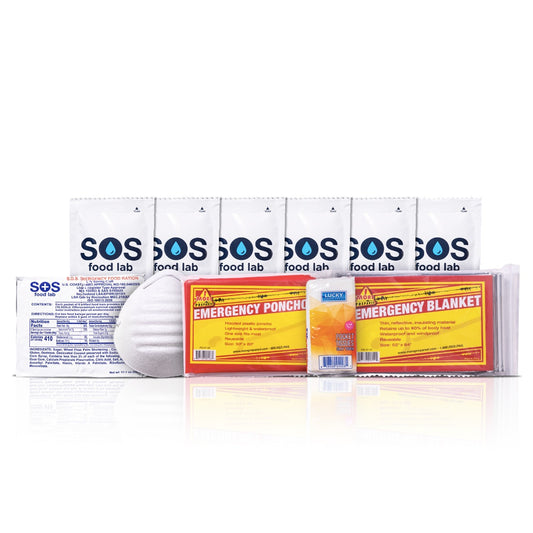
Bug-out planning focuses on speed, portability, and essential survival needs. Kits in this collection are organized to support hydration, calories, first aid, lighting, communication, personal protection, and basic shelter while evacuating or relocating temporarily.
Bug-Out / Go Bags are commonly kept near exits, in vehicles, or at workplaces so they can be accessed immediately during evacuation orders or fast-moving emergencies. Many households maintain both a bug-out bag and a home emergency kit to ensure preparedness whether they need to stay or leave.
These kits are designed to balance compact size with practical coverage, helping individuals and families evacuate safely and with greater confidence during high-stress situations.
FAQ
What is a bug-out bag or go bag?
A bug-out bag, also called a go bag, is a portable emergency kit designed to support quick evacuation. It contains essential supplies to help a person remain self-sufficient while leaving home during an emergency.
What should a bug-out bag include?
Most bug-out bags include drinking water, shelf-stable food, first aid supplies, lighting, communication tools, emergency blankets, protective gear, and basic personal safety items. Contents may vary depending on climate, location, and evacuation needs.
When should a bug-out bag be used?
Bug-out bags are used during evacuation events such as wildfires, earthquakes, floods, severe storms, or other situations where remaining at home is unsafe or not possible.
How long should a bug-out bag last?
Many bug-out bags are designed to support one person for approximately 72 hours. Some individuals choose to supplement bags with additional supplies based on travel distance, destination, or local risk factors.
Where should a bug-out bag be stored?
Bug-out bags should be stored in easily accessible locations such as near exits, in closets, or in vehicle trunks so they can be grabbed quickly during an evacuation.
How is a bug-out bag different from a 72-hour emergency kit?
A 72-hour emergency kit is often designed for shelter-in-place use, while a bug-out bag prioritizes portability and mobility. Bug-out bags focus on lightweight, compact supplies suitable for travel.
How many bug-out bags do I need?
Most preparedness plans recommend one bug-out bag per person. Families may also choose to maintain additional shared supplies for children or pets.
Can bug-out bags be customized?
Yes. Bug-out bags can be customized based on household size, climate, evacuation routes, medical needs, pets, or regional hazards.