Collection: Operational Emergency Kits
These kits are designed for the staff members responsible for managing emergencies inside a facility, campus, or workplace. Unlike general emergency supplies, operational kits support specific roles such as shelter-in-place teams, search and rescue, floor wardens, and mass casualty or bleed control responders.
Used in schools, workplaces, warehouses, healthcare facilities, and government buildings, these kits provide the tools needed to carry out emergency procedures during the critical minutes before first responders arrive.
-
Shelter in Place Kit in Bag
Regular price $129.00Regular priceUnit price / perSale price $129.00 -
Shelter in Place Kit in Pail
Regular price $129.00Regular priceUnit price / perSale price $129.00 -
Floor Warden Kit
Regular price $45.00Regular priceUnit price / perSale price $45.00 -
50 Person Trauma Kit
Regular price $229.00Regular priceUnit price / perSale price $229.00 -
100 Person Trauma Kit
Regular price $429.00Regular priceUnit price / perSale price $429.00 -
500 Person Trauma Kit
Regular price $1,399.00Regular priceUnit price / perSale price $1,399.00 -
1,000 Person Trauma Kit
Regular price $2,499.00Regular priceUnit price / perSale price $2,499.00 -
Mayday Road Warrior Deluxe (-10º Below) Kit
Regular price $199.00Regular priceUnit price / perSale price $199.00 -
Mayday Economy Road Warrior Kit
Regular price $75.00Regular priceUnit price / perSale price $75.00 -
Mayday Mountain Road Warrior Kit
Regular price $155.00Regular priceUnit price / perSale price $155.00 -
Mayday Urban Road Warrior Kit
Regular price $149.00Regular priceUnit price / perSale price $149.00 -
Search & Rescue Kit - 2 Person
Regular price $139.00Regular priceUnit price / perSale price $139.00 -
Search & Rescue Kit - 4 Person
Regular price $229.00Regular priceUnit price / perSale price $229.00
Why Operational Kits Are Different from Standard Emergency Kits
Most emergency kits are designed for general survival. Operational kits are designed for incident management.
During a real emergency, confusion, lack of communication, and poor accountability create risk. These kits are built to support emergency procedures such as:
- Staff accountability and victim tracking
- Room-to-room search and rescue
- Coordinated evacuation and floor control
- Temporary shelter-in-place operations
- Immediate hemorrhage control and triage
They are intended for use by floor wardens, safety teams, incident command staff, nurses, security personnel, and trained employees who have assigned emergency responsibilities.
Designed to Support Emergency Action Plans (EAP), ICS, and OSHA Guidance
These kits align with common emergency planning frameworks used by organizations, including:
- OSHA Emergency Action Plans (EAP)
- Incident Command System (ICS) principles
- School and campus safety plans
- Workplace evacuation procedures
- Bleed Control and Stop The Bleed® programs
They help translate written emergency plans into practical, usable equipment on site.
Common Use Cases for Operational Emergency Kits
Organizations typically deploy these kits when they need to be prepared for:
- Active threat or lockdown situations
- Natural disasters requiring shelter-in-place
- Missing persons or post-incident search operations
- Mass casualty incidents
- Large-scale evacuations
- Medical emergencies involving severe bleeding
Selecting the Right Operational Kit for Your Facility
Each sub-category supports a different emergency role:
- Shelter in Place Kits – Supplies to support occupants when leaving the building is unsafe
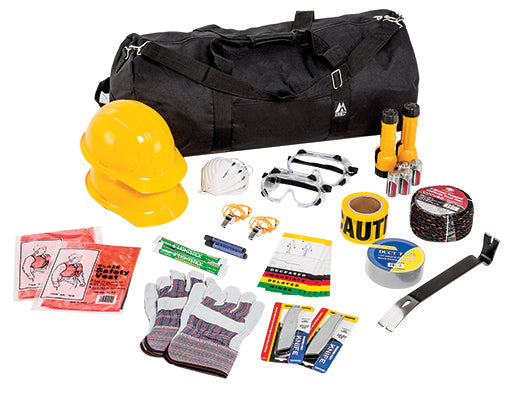
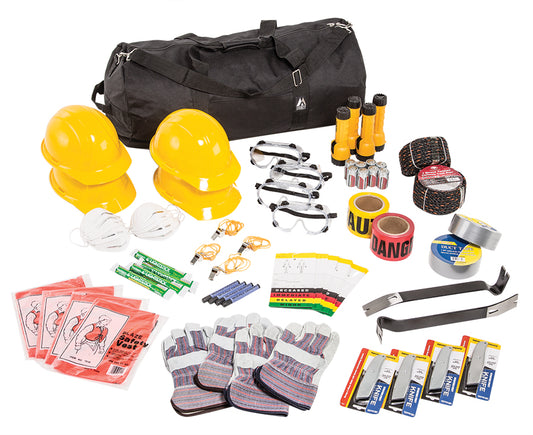
- Search and Rescue Kits – Tools for teams conducting systematic room searches
- Floor Warden Kits – Equipment for evacuation leaders to manage and clear assigned areas
- Mass Casualty & Bleed Control Stations – Rapid access trauma supplies for hemorrhage control and triage
If you are building or updating your emergency preparedness program, these kits form the operational layer that supports your plan in real time.
Who These Kits Are For
These kits are most often purchased by:
- Safety directors and risk managers
- School administrators and district safety teams
- Facilities managers
- Emergency preparedness coordinators
- Government and public agency buyers
- Corporate workplace safety teams