

SKU KS-09-02
100-Person Mass Casualty Trauma Kit
100-Person Mass Casualty Trauma Kit
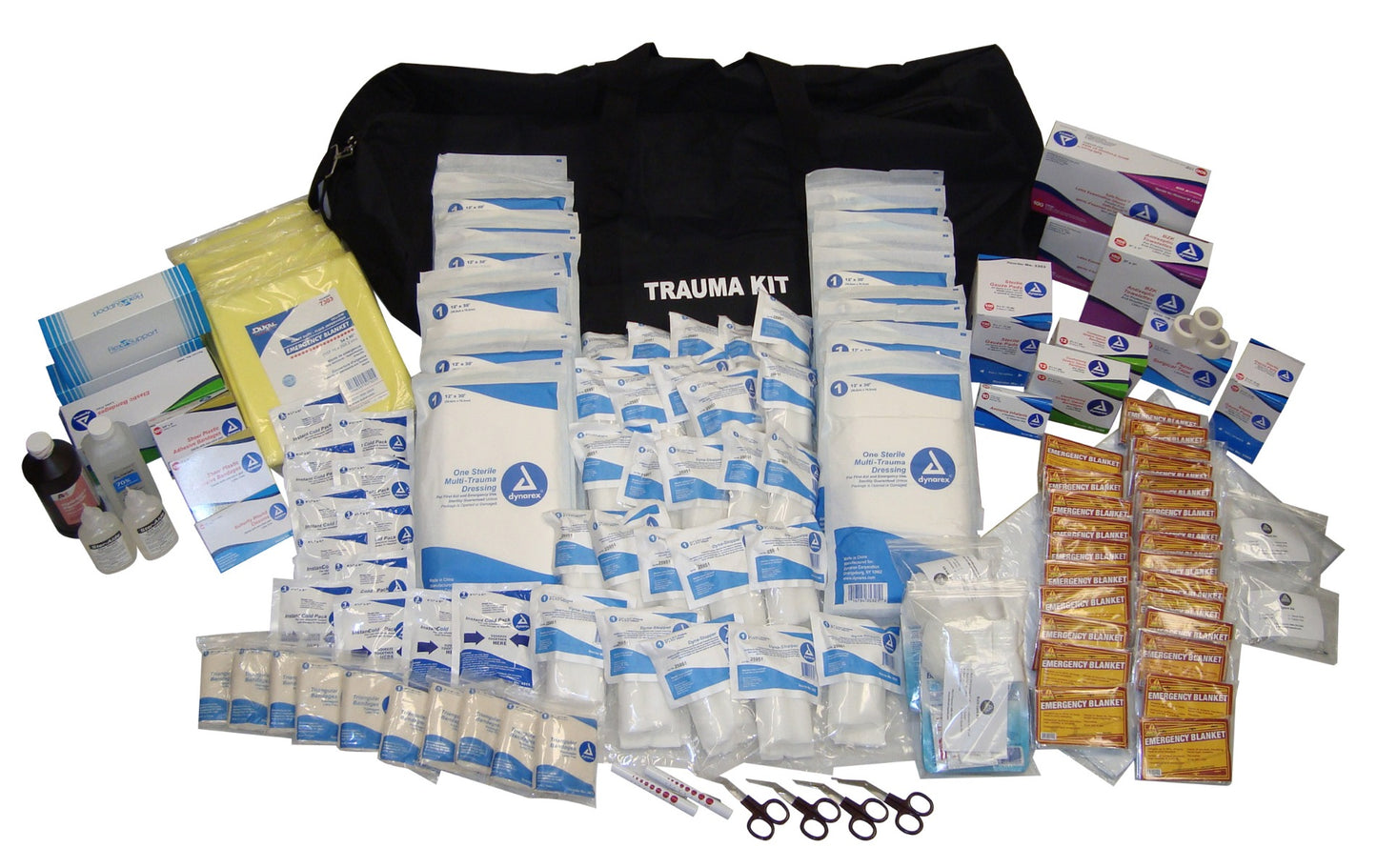
Mass casualty trauma kit supporting response to incidents involving up to 100 people. Includes bloodstoppers, multi-trauma dressings, gauze, bandages, splint kit, cervical collar, burn care, eyewash, ice packs, paramedic blankets, and latex gloves in two heavy-duty duffel bags.
- ✔ GSA Contract Holder
- ✔ Bulk & Volume Pricing Available
- ✔ Purchase Orders Accepted
- ✔ Tax-Exempt Agencies Supported
About This Kit
About This Kit
The 100-Person Mass Casualty Trauma Kit provides the essential first aid and trauma care supplies needed to respond to multiple injuries during a mass casualty incident, natural disaster, or large-scale emergency event. Designed for general staff, facility safety teams, and designated first aid responders rather than professional medical personnel, this kit supports immediate response in the critical minutes before emergency services arrive. All supplies are organized in a heavy-duty duffel bag for fast deployment and easy transport to the incident site.
200 1 x 3 Plastic Bandages
1 2 x 2 Sterile Gauze Pads (100 count)
2 2" Non-Sterile Gauze Rolls (12 pack)
1 3 x 3 Sterile Gauze Pads (100 count)
10 Elastic Bandages 3"
15 Adhesive Tape 1 x 10 yards
1 Alcohol (16 ounces)
1 Ammonia Inhalant Ampules (Box of 10)
1 Antiseptic Towelettes (100 count)
4 Bandage Shears
25 Bloodstoppers
1 Body Bag
2 Burn Care Kit (15 Pieces)
2 Cervical Collar
2 Eye Wash (4 ounces)
1 Hydrogen Peroxide (16 ounces)
12 Instant Ice Pack 4.5 x 6 Bag
1 Butterfly Bandages (100 count)
2 Latex Gloves (100 count)
20 Multi Trauma Dressing 10 x 30
5 Paramedic Blanket 54 x 80
2 Penlight
25 Emergency Blankets 6' x 4'
2 Splint Kit (1-18" & 1-24" + Gauze & Pins)
10 Triangle Bandages 36 x 52
2 - Duffel Bags
Who This Kit Is For
Who This Kit Is For
This kit is intended for schools, workplaces, government facilities, healthcare campuses, event venues, transportation hubs, and any organization that maintains mass casualty response capability as part of its emergency operations plan.
Common deployment contexts include:
- School and campus mass casualty preparedness programs
- Workplace and corporate emergency response teams
- Government agency and public facility emergency planning
- Large event and venue emergency preparedness
- Military installation and base emergency response
- Community emergency response team (CERT) deployments
- Disaster staging and reunification site supply
One kit per 100 occupants is recommended as a baseline. Larger facilities should consider the 50, 500, or 1,000-person configurations for smaller or broader coverage.
Purchase orders, tax-exempt orders, GSA contract, and cooperative purchasing available for qualifying organizations. Volume pricing available for multi-site deployments.
Shelf Life, Storage & Maintenance
Shelf Life, Storage & Maintenance
Sterile supplies including gauze pads, bandages, and wound care items have defined shelf lives and should be inspected and rotated annually. Hydrogen peroxide and eyewash should be checked and replaced according to manufacturer expiration dates.
Instant ice packs, bloodstoppers, and burn care components should be inspected annually. Durable items including bandage shears, splint kit, cervical collar, paramedic blankets, and the duffel bag are reusable and should be inspected for damage.
Kit Specifications
- Occupant Capacity: 100 persons
- Use Case: Mass casualty response, large-scale emergency first aid
- Container: Two heavy-duty duffel bags
- Responder Level: General staff and designated first aid responders
- Weight: [add from product details]
FAQ
FAQ
Who is this kit designed for?
This kit is designed for general staff, facility safety teams, and designated first aid responders in schools, workplaces, government facilities, and other organizations that maintain mass casualty response capability. It is not designed to replace professional emergency medical services but to support immediate response in the critical minutes before first responders arrive.
How many people does this kit support?
This kit is designed to support response to a mass casualty incident involving up to 100 people. Smaller or larger configurations supporting 50, 500, and 1,000 persons are also available.
What is a bloodstopper used for?
Bloodstoppers are trauma dressings designed to control severe bleeding from wounds. They are a critical component of mass casualty response kits and are intended for use by trained or designated first aid responders.
Does this kit include bleed control supplies?
Yes. The kit includes bloodstoppers, multi-trauma dressings, elastic bandages, adhesive tape, and latex gloves that support hemorrhage control as part of a broader mass casualty response.
How many duffel bags does this kit come in?
The 100-person kit comes in two duffel bags. Smaller or larger configurations come in single or multiple bags — the 50-person kit in one bag, the 500-person kit in three bags, and the 1,000-person kit in five bags — for organized storage and deployment across a facility.
How often should this kit be inspected?
Kits should be inspected annually. Sterile supplies, medications, and consumable components should be replaced according to manufacturer expiration dates. A full kit inspection checklist is recommended as part of your organization's annual emergency preparedness review.
Is this kit suitable for CERT teams?
Yes. This kit is well suited for CERT teams and community emergency response volunteers conducting organized mass casualty response operations following a disaster.
Can this kit be customized?
Yes. Custom configurations are available for organizations with specific response requirements. Contact us at 888.733.7245 or quotes@moreprepared.com to discuss your needs.

This emergency kit is designed for individuals and households preparing for disruptions such as earthquakes, power outages, or unexpected travel delays. Its portable, all-in-one format supports basic needs during the first 72 hours of an emergency, whether stored at home or kept in a vehicle, and provides a practical foundation for personal and family preparedness planning.
excellent choice of items inside good value