Collection: Emergency Food Bars for Shelter-in-Place and Emergency Kits

More Prepared emergency food bars provide shelf-stable, ready-to-eat calories for situations where cooking, refrigeration, or food service is unavailable. US Coast Guard approved and made in the USA, these compact rations are widely used in classrooms, offices, emergency kits, rolling bins, and facility preparedness supplies to support occupants during shelter-in-place events, evacuations, and extended emergencies.

Available from SOS, Mayday, Datrex, Mainstay, and New Millennium in calorie formats ranging from 400 to 3,600 calories per bar, emergency food bars are a practical and cost-effective solution for organizations planning emergency food supplies for groups of any size. Available individually, by the case, and by the pallet for large-scale institutional programs. Purchase orders, tax-exempt orders, GSA contract, CMAS, and cooperative purchasing available for qualifying organizations.

26 products

Why Organizations Use Emergency Food Bars

Emergency food bars are designed specifically for emergency use. They are calorie-dense, non-thirst-provoking, require no preparation, no water, no cooking, and no utensils, and store easily for years in compact packaging. Their low cost per person and long shelf life make them ideal for schools, workplaces, warehouses, government facilities, and public agencies building emergency preparedness supplies across multiple rooms, buildings, or campuses.

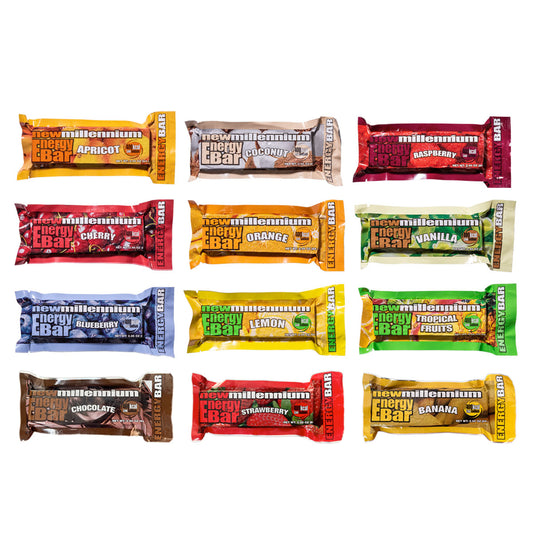
All More Prepared emergency food bars are US Coast Guard approved and made in the USA. SOS and Mainstay are kosher certified. Mayday and Datrex carry additional SOLAS international maritime approval. New Millennium bars are available in up to 12 fruit flavors making them particularly popular for student and family kits.

Understanding Calorie Sizes and Ration Planning

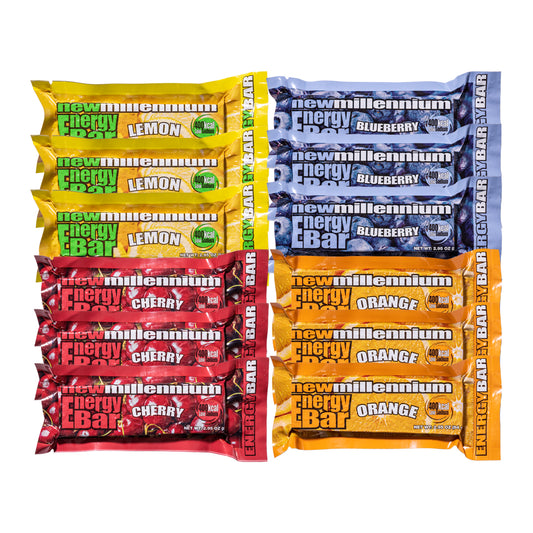
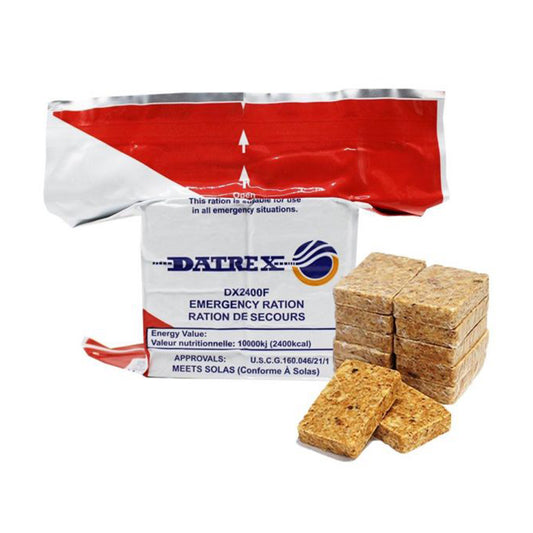
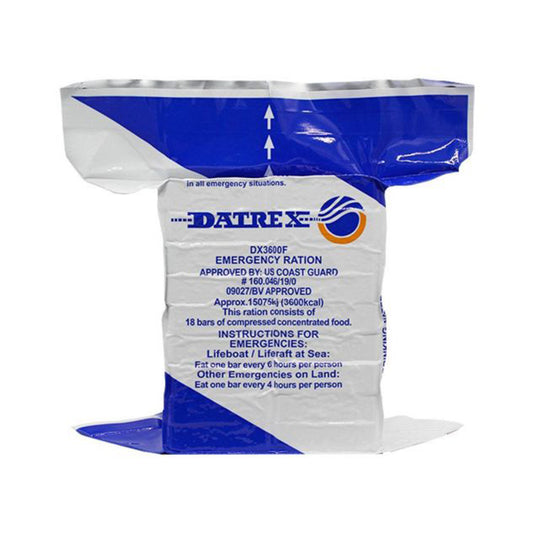
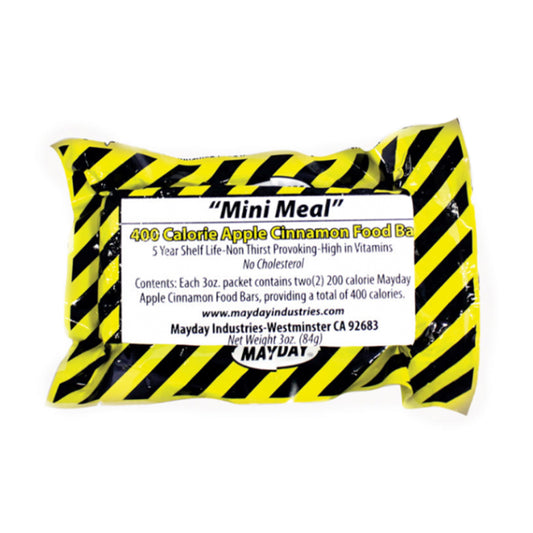
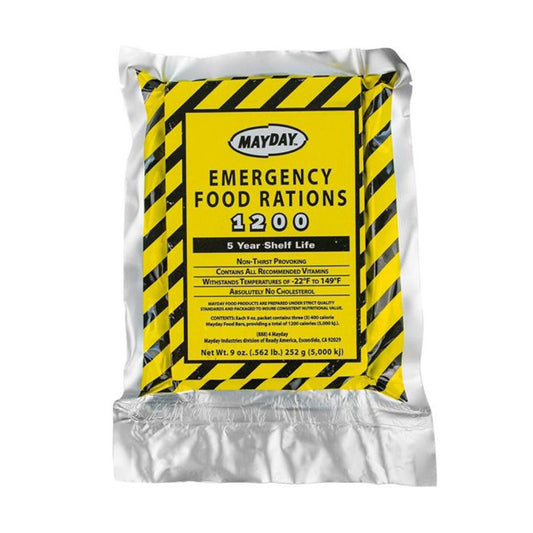
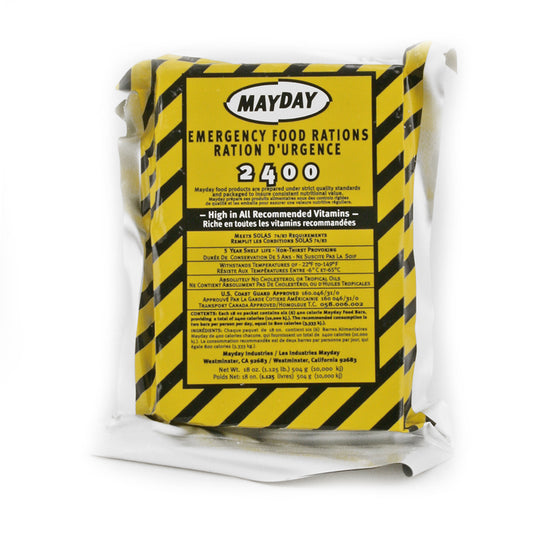
Food bars are available in several calorie formats depending on brand. The 400-calorie individually wrapped bar is the smallest single-serving format and is commonly used in student kits and distribution programs. Larger bars — 1,200, 2,400, and 3,600 calories depending on brand — include individually wrapped internal portions for easy distribution during an emergency. A standard 2,400-calorie bar provides 6 individually wrapped 400-calorie segments — one full day of minimum caloric intake for one person at a 72-hour rationing level.

Why 400-Calorie Bars Are Often Used in Classrooms

Preschool and elementary programs frequently select 400-calorie flavored bars — particularly New Millennium bars in assorted fruit flavors — because children are more likely to eat a familiar snack-style portion than a compressed multi-serving ration. Smaller portions and easy distribution help teachers manage shelter-in-place situations more effectively and reduce waste during short-duration events.

Designed for Schools, Workplaces, and Emergency Storage

Emergency food bars are commonly stored in classroom emergency buckets and lockdown kits, office and workplace emergency rolling bin kits, facility emergency supply rooms and storage closets, shelter and staging areas, CERT and response team supply kits, and student individual emergency kits. Their long shelf life and small storage footprint make them one of the easiest emergency foods to deploy across multiple rooms, buildings, or campuses without specialized storage requirements.
FAQ for Emergency Food Bars

How many food bars are needed per person for an emergency?

A common 72-hour planning baseline is 2,400–3,600 calories per person. One 2,400-calorie bar provides 6 individually wrapped 400-calorie segments and typically supports one person for up to three days at minimum ration levels. For a classroom of 30 students, plan 30 bars for a 72-hour supply. For a 100-person office, plan 100 bars. For larger facilities, multiply your total occupant count by the number of days to calculate case and pallet quantities. Contact us at 888.733.7245 or quotes@moreprepared.com for help planning quantities for your specific program.

Do emergency food bars require water?

No. Emergency food bars are specifically formulated to be non-thirst-provoking and require no water, no preparation, and no cooking. They are ready to eat directly from the wrapper. This makes them particularly well suited for shelter-in-place situations where water supplies may also be limited. Note that emergency water should still be stored separately as part of a complete preparedness program — food bars address caloric needs but do not replace hydration requirements.

How long do emergency food bars last?

Most US Coast Guard approved emergency food bars carry shelf lives of up to 5 years from the date of manufacture when stored under recommended conditions. New Millennium bars carry longer shelf lives. All bars should be stored in a cool dry location away from direct sunlight and extreme temperatures to maximize shelf life. Follow the date markings on the packaging when planning rotation cycles. Expiring bars can often be donated to food banks or shelters before replacement.

Are food bars appropriate for schools?

Yes. Emergency food bars are one of the most widely used emergency food options in K–12 schools, preschools, and daycare facilities. They require no preparation, can be quickly distributed to students, and store compactly in classroom emergency buckets and lockdown kits. New Millennium bars in assorted fruit flavors are particularly popular for younger students. SOS and Mainstay bars are kosher certified for programs with dietary requirements. Most California school districts include emergency food bars as part of their classroom emergency supply programs under California Education Code Section 32282.

How are food bars packaged for distribution?

Emergency food bars are individually wrapped for single-serving distribution — either as standalone 400-calorie bars or as multi-serving bars with individually wrapped internal segments. A 2,400-calorie bar contains 6 individually wrapped 400-calorie segments that can be broken apart and distributed one at a time. This design supports organized rationing during shelter-in-place events without requiring containers, utensils, or food service infrastructure. Cases and pallets are available for bulk storage and program-level purchasing.

Why use food bars instead of MREs?

Emergency food bars and MREs serve different purposes. Food bars are the simpler option — no preparation, no heating, no packaging waste beyond the wrapper, and lower cost per calorie. They are ideal for short-duration shelter-in-place events of 1–3 days where simplicity and fast distribution are priorities. MREs provide a more complete meal experience with multiple components, higher caloric content per meal, and greater variety — making them better suited for longer-duration programs or situations where occupant morale and meal quality are important considerations. Many organizations stock both — food bars for immediate kit deployment and MREs for supplemental or extended-duration supply.